Google Maps vs organic search: where should your business focus first?
Compare Google Maps and organic search to decide local SEO, website and reputation priorities.
Two discovery paths
Google Maps and organic search help customers find businesses, but they work differently. Maps is strong for immediate local intent. Organic search is strong for research, comparison and content.
Local businesses usually need both, but priority depends on context.
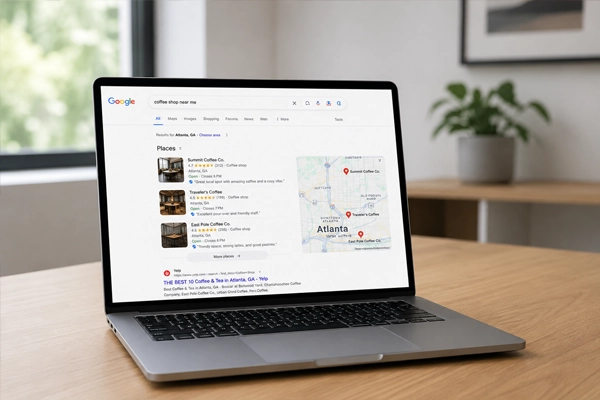
When to focus on Google Maps
If customers search nearby and want directions, phone or a quick visit, Maps is a priority. Restaurants, clinics, local services and physical stores depend heavily on it.
A complete profile and recent reviews are essential.
When to focus on organic search
If customers research before deciding, compare options or seek guidance, the website and blog become stronger. Educational content and service pages capture demand.
Organic search builds authority.
Where Rankke.me fits in this strategy
Local SEO depends on signals that prove the business is active, trusted and chosen by real customers. Reviews are one of the clearest public signals because they show recent demand, service quality and the words customers use to describe the experience. But asking for reviews without a process can create inconsistent results and unnecessary public risk.
Rankke.me helps connect customer experience to local visibility. Before sending a customer to Google, the business can collect feedback in a controlled environment, identify satisfied customers and route them to the public review flow. At the same time, dissatisfied customers can be handled privately, which protects the brand and creates operational learning.
This makes local SEO more sustainable. Instead of treating reviews as a campaign, the company turns every completed experience into a possible trust signal. The profile earns fresh reviews more consistently, managers understand what customers value and the business strengthens the proof that future buyers see in Google Search and Maps.
For companies with several locations, Rankke.me also helps compare units. A location with strong service but few reviews may need a better request routine. A location with many complaints may need operational attention before more public exposure.
How to use the article in a conversion workflow
Local visibility only matters when it turns into calls, bookings, visits and sales. For that reason, every local SEO action should connect to a reputation action. If the company updates its profile, it should also improve the review request routine. If it creates a service page, it should connect that promise to real customer proof. If it opens a new location, it should start collecting feedback from the first customers.
This connection helps the business move from traffic to trust. People who find a local company rarely decide based on ranking alone. They compare rating, comments, recency, photos, responses and how credible the business feels. A structured Rankke.me flow makes these trust signals grow with less manual effort.
The conversion goal is not simply appearing more often. It is making the company look like the safest choice when the buyer is ready to act.
The best strategy combines both
The Business Profile drives quick action. The website explains value. The blog answers questions. Reviews connect everything with trust.
Rankke.me works on satisfaction and reputation, strengthening signals that impact both paths.
How to turn this topic into a routine
For a local business, this topic is practical. A customer chooses with the information they can see: reviews, comments, photos, clear services, recent replies and the feeling that other people had a good experience. These details work together to create trust before the first contact.
The first step is to map where the company appears: Google, website, social profiles, directories, marketplaces, location pages and institutional materials. Then check whether the message is consistent everywhere. A business can deliver a strong experience and still lose trust when public information looks incomplete or contradictory.
Metrics to monitor
Track what a manager can actually use: how many new reviews arrive, what customers praise, what complaints repeat, how fast the team replies and whether more people call, book, ask for directions or place orders after seeing the business online.
These indicators show whether the business is merely visible or whether it is building enough authority to be remembered, compared and recommended.
A practical 30-day plan
In week one, review the main digital presence points. In week two, organize replies and review requests. In week three, create or improve content that explains services, differentiators and common questions. In week four, compare signals before and after: reviews, comments, searches and contacts.
Progress comes from repetition. Strong reputation is built when the company turns good experiences into public evidence that is easy to find.
Mistakes that reduce impact
The most common mistake is caring about reputation only when criticism appears. Another is publishing generic content unrelated to real customer doubts. It is also risky to ignore positive reviews, because they show which promises the company already fulfills.
Rankke.me helps connect satisfaction, reviews and reputation in a simple routine for local teams and multi-location operations.
Practical example
A local company may invest in profile optimization, photos and service pages, but still struggle to convert visibility into customers. One reason is that people rarely choose only because a business appears in search. They compare recent reviews, comment quality, rating stability and whether the company seems responsive.
With Rankke.me, local SEO work can be connected to a reputation routine. After each relevant service, the customer receives a private satisfaction step. Satisfied customers are invited to leave a review, adding freshness and proof to the Google profile. Dissatisfied customers are handled before the issue becomes a public obstacle. Over time, the company strengthens both visibility and conversion.
This is why reviews should not be treated as a separate marketing task. They are part of the local search experience. They influence how the company is perceived after it is found.
How to deepen the analysis before deciding
The next step is to connect local visibility with conversion signals. Ranking higher in Google Maps is useful, but the business also needs to understand whether people are calling, requesting directions, visiting the website and choosing the company after reading reviews.
A good local SEO analysis compares profile data with reputation data. If visibility is growing but contacts are not, the issue may be trust, weak photos, unclear services or reviews that do not support the promise. If contacts are growing but reviews are getting worse, the operation may be creating demand faster than it can deliver quality.
Rankke.me helps strengthen this layer because it creates a repeatable bridge between real customer experience and visible trust. The business can collect feedback privately, identify satisfied customers and guide them to review the location that actually served them. This is especially important for franchises and multi-location operations, where one unit should not borrow or hide the reputation of another.
The best local SEO work does not end when the profile is optimized. It continues every time a customer experience becomes a new trust signal.
Frequently asked questions
Is Maps more important than the website?
It depends on the business. For many local companies, Maps is the entry point.
Does a blog help a local business?
Yes, when it answers real questions.
Do reviews affect both?
They affect trust in both paths.
Where should I start?
If the foundation is weak, start with profile, website and reviews.