Local SEO: how reviews help businesses get found
Understand the role of reviews, Google Business Profile and consistent business information in local search growth.
What local SEO is
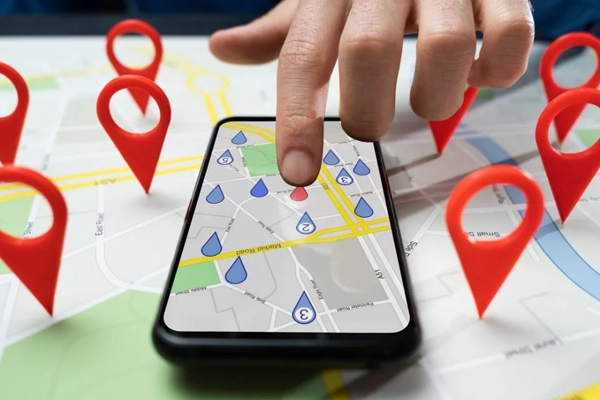
Local SEO helps a business appear for searches with geographic intent. When someone searches for a clinic nearby, a restaurant in a specific area or a local service provider, Google tries to show relevant, close and trustworthy options.
Where reviews fit
Reviews help people decide. They show real experiences, reduce uncertainty and create trust. A profile with recent reviews and business replies looks more active than one with old or unanswered feedback.
Complete the Business Profile
Name, category, address, phone, opening hours, website, services, photos and description should be accurate. Inconsistent information creates friction and hurts conversion.
Where Rankke.me fits in this strategy
Local SEO depends on signals that prove the business is active, trusted and chosen by real customers. Reviews are one of the clearest public signals because they show recent demand, service quality and the words customers use to describe the experience. But asking for reviews without a process can create inconsistent results and unnecessary public risk.
Rankke.me helps connect customer experience to local visibility. Before sending a customer to Google, the business can collect feedback in a controlled environment, identify satisfied customers and route them to the public review flow. At the same time, dissatisfied customers can be handled privately, which protects the brand and creates operational learning.
This makes local SEO more sustainable. Instead of treating reviews as a campaign, the company turns every completed experience into a possible trust signal. The profile earns fresh reviews more consistently, managers understand what customers value and the business strengthens the proof that future buyers see in Google Search and Maps.
For companies with several locations, Rankke.me also helps compare units. A location with strong service but few reviews may need a better request routine. A location with many complaints may need operational attention before more public exposure.
How to use the article in a conversion workflow
Local visibility only matters when it turns into calls, bookings, visits and sales. For that reason, every local SEO action should connect to a reputation action. If the company updates its profile, it should also improve the review request routine. If it creates a service page, it should connect that promise to real customer proof. If it opens a new location, it should start collecting feedback from the first customers.
This connection helps the business move from traffic to trust. People who find a local company rarely decide based on ranking alone. They compare rating, comments, recency, photos, responses and how credible the business feels. A structured Rankke.me flow makes these trust signals grow with less manual effort.
The conversion goal is not simply appearing more often. It is making the company look like the safest choice when the buyer is ready to act.
Recency matters
Many old reviews are helpful, but recent reviews show how the company performs today. Reputation should be continuous, not a one-time campaign.
Replies influence perception
Replying to reviews shows care. Thank positive customers and handle negative comments with professionalism.
Signals that work alongside reviews
Reviews are important, but local SEO depends on a broader set of signals: category accuracy, distance, relevance, consistent business data, website quality, photos, services and user engagement.
That is why a business should not chase reviews while leaving the profile incomplete. Customers judge the full picture.
Use comments to understand local intent
Customer comments reveal how people describe the business. If reviews mention fast service, easy parking, a specific neighborhood or a specialized service, those terms can inform website pages and content strategy.
Do not script reviews. Use natural customer language to understand demand.
Multiple locations
Each location should have its own profile and reputation data. Combining everything can hide local problems and confuse customers. Separate reporting helps identify which units need training and which ones can become benchmarks.
How the blog supports local discovery
A blog helps when it answers questions that come before buying. It does not replace the Business Profile, but it builds authority and creates entry points for informational searches.
Local SEO as an operating habit
Local SEO is not only a marketing task. Operations, customer service and reputation all contribute. If opening hours are wrong, customers get frustrated. If reviews go unanswered, trust drops. If photos are outdated, people hesitate.
Create a monthly routine: check profile information, add fresh photos, answer pending reviews, review search insights and compare review volume across locations.
What to measure beyond rankings
Rankings matter, but business outcomes matter more. Track calls, direction requests, website clicks, messages, bookings and conversion quality. A higher position that does not generate qualified demand may not be the best indicator.
Local SEO should be measured as part of acquisition and trust, not as a vanity metric.
Review content and buyer confidence
Review text can reduce uncertainty before contact. A customer comparing local businesses wants to know whether the company is reliable, responsive and capable of solving the problem. Detailed reviews answer questions the website may not cover.
That is why authentic comments matter. A profile with recent, specific feedback feels safer than a profile with only a few old ratings and no replies.
Internal ownership
Assign ownership for local SEO tasks. Someone should check profile accuracy, someone should answer reviews and someone should review performance. Without ownership, the profile slowly becomes outdated.
Local visibility is a living asset. It needs small, regular maintenance.
How to turn this topic into a routine
For a local business, this topic is practical. A customer chooses with the information they can see: reviews, comments, photos, clear services, recent replies and the feeling that other people had a good experience. These details work together to create trust before the first contact.
The first step is to map where the company appears: Google, website, social profiles, directories, marketplaces, location pages and institutional materials. Then check whether the message is consistent everywhere. A business can deliver a strong experience and still lose trust when public information looks incomplete or contradictory.
Metrics to monitor
Track what a manager can actually use: how many new reviews arrive, what customers praise, what complaints repeat, how fast the team replies and whether more people call, book, ask for directions or place orders after seeing the business online.
These indicators show whether the business is merely visible or whether it is building enough authority to be remembered, compared and recommended.
A practical 30-day plan
In week one, review the main digital presence points. In week two, organize replies and review requests. In week three, create or improve content that explains services, differentiators and common questions. In week four, compare signals before and after: reviews, comments, searches and contacts.
Progress comes from repetition. Strong reputation is built when the company turns good experiences into public evidence that is easy to find.
Mistakes that reduce impact
The most common mistake is caring about reputation only when criticism appears. Another is publishing generic content unrelated to real customer doubts. It is also risky to ignore positive reviews, because they show which promises the company already fulfills.
Rankke.me helps connect satisfaction, reviews and reputation in a simple routine for local teams and multi-location operations.
Frequently asked questions
Do reviews improve local SEO?
They help trust and can support local visibility, but they are one part of a broader set of factors.
Should I reply to every review?
Replying to as many as possible is recommended, especially detailed or negative reviews.
Does a blog help local businesses?
Yes, when it answers real questions and connects services, location and customer experience.