NPS promoters, passives and detractors: what to do with each group
Learn how to act on promoters, passives and detractors to turn NPS into improvement and reputation.
Why NPS groups matter
The split between promoters, passives and detractors turns a score into action. Without it, the company sees one number and misses the chance to respond differently to each customer moment.
Promoters can recommend and review. Passives need a reason to become enthusiastic. Detractors need fast recovery.
Promoters: preserve and activate
Promoters give 9 or 10. They see value and may help build visible trust. Thank them first. Then, when context is right, invite them to leave a Google review or testimonial.
The request should be optional and respectful. A promoter should not feel pressured.
Passives: understand what was missing
Passives give 7 or 8. They are not necessarily unhappy, but they are not enthusiastic either. This group shows the gap between acceptable and memorable.
Ask what would improve the experience. Answers often involve communication, speed, expectation setting or small service details.
Where Rankke.me fits in this strategy
The practical value of NPS promoters, passives and detractors: what to do with each group is not only measuring the customer experience. The real gain comes when each answer creates the right next step. A promoter should not be treated the same way as a passive customer, and a detractor should not receive a public review request before the company has a chance to understand what went wrong.
Rankke.me was built for this workflow. The platform lets the business collect satisfaction signals first, organize responses by customer profile and create safer paths after the answer. Satisfied customers can be invited to leave a public review on Google or another relevant channel. Customers who show dissatisfaction can be routed to a private recovery flow, where the team can listen, solve and document the case.
This matters because customer satisfaction is not isolated from public reputation. If the company asks everyone for a Google review without reading the experience first, it may amplify frustration instead of trust. When the request is based on NPS or satisfaction data, the brand protects itself and uses positive experiences with more precision.
For teams with multiple locations, this also creates management visibility. Leaders can see which unit generates more promoters, which channel creates more friction and where public reputation is at risk before the problem appears in search results.
How to use the article in a conversion workflow
A useful way to apply this topic is to connect education and action. The customer-facing part should be simple: one clear question, a short explanation and a respectful next step. The internal part needs more structure: score classification, responsible owner, response time and a decision about whether the customer should be invited to review publicly.
For example, a promoter can receive a message that thanks them and explains how their public review helps other customers choose with confidence. A passive customer can receive a follow-up question that uncovers what prevented an excellent experience. A detractor can be routed to a recovery message, a call or a support ticket.
This is where the business starts turning content into revenue. Better feedback reduces churn risk, better recovery protects public reputation and better review routing increases social proof where future customers compare options.
Detractors: recover and learn
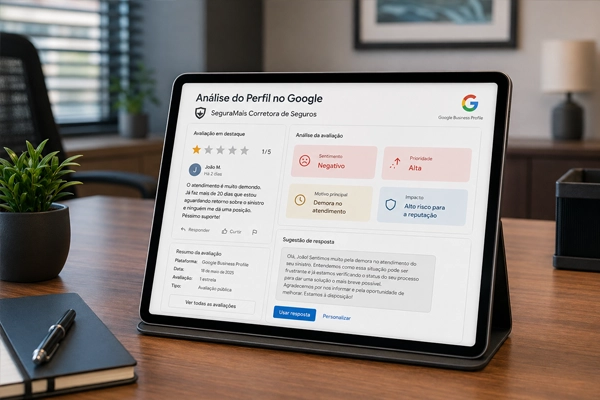
Detractors give 0 to 6. They may leave, complain publicly or reduce trust in the brand. Follow-up should be fast, empathetic and focused on resolution.
Not every detractor can be recovered, but every detractor can teach something. Repeated complaints reveal operational priorities.
How Rankke.me helps
Rankke.me organizes responses by group, supports alerts for detractors and helps create promoter flows. NPS becomes a management routine, not just a report.
How to turn this topic into a routine
To apply NPS promoters, passives and detractors: what to do with each group consistently, start by defining which customer journey moment you want to measure. A survey sent after support, purchase, appointment or delivery captures a different signal from a relationship survey sent every quarter. Mixing every moment into the same dashboard often creates a clean number that is hard to act on.
Then standardize three decisions: who receives the survey, when it is sent and what happens after each response. Promoters can move to a review request or referral flow. Passives deserve investigation into small frictions. Detractors need fast follow-up, internal registration and a clear owner for recovery.
Metrics to monitor with NPS
NPS becomes more useful when it is analyzed with response volume, response rate, comment themes and variation by location, channel or team. A high score with few answers may be fragile. A medium score with clear comments may be more useful for improving the operation.
It is also worth tracking the conversion of promoters into public reviews. That metric shows whether internal satisfaction is becoming visible proof for future customers.
A practical 30-day plan
In week one, review the question, audience and sending moment. In week two, connect responses to a classification routine: praise, fixable issue, critical issue or suggestion. In week three, create follow-up messages for each group. In week four, summarize the learnings and choose two operational improvements to execute.
This simple cycle prevents NPS from becoming only a number in a report. The metric starts guiding service quality, reputation and growth.
Mistakes that reduce impact
The most common mistake is asking for feedback and never replying. Another is sending too many surveys without context until customers stop paying attention. It is also risky to look only at the score and ignore comments, because the explanation usually points to the next action.
Rankke.me helps organize this cycle by connecting surveys, segmentation, review requests and follow-up in a continuous routine.
Practical example
Imagine a clinic, school or service company that receives 300 customers per month and sends an NPS survey after each completed experience. If the team only watches the score, it may miss the operational value of the data. But if the answers are routed correctly, the same survey becomes a growth system.
Promoters can receive a thank-you message and a contextual invitation to share their experience publicly. Passives can receive a short follow-up asking what would have made the experience excellent. Detractors can generate an alert for the team, with enough context to call, apologize, solve or at least document the problem. After a few weeks, the company no longer has only an NPS number. It has a map of friction, a list of customers at risk and a source of positive visible trust.
This is the type of routine Rankke.me is designed to support: measuring satisfaction, protecting the brand and converting happy customers into reputation assets without exposing unhappy customers too early.
How to deepen the analysis before deciding
The next step is to avoid treating NPS promoters, passives and detractors: what to do with each group as an isolated metric. A useful analysis separates responses by journey stage, location, channel, customer profile and time period. This shows whether the score reflects the whole business or only a specific part of the experience.
Comments deserve the same attention as the number. A company can have a reasonable NPS and still lose customers because of a recurring operational detail: delays, unclear communication, poor handoff between teams or inconsistent service after the sale. These patterns rarely appear in the score alone. They appear in the words customers repeat.
It is also important to compare trend, not only the current result. A score that moves from 35 to 48 may indicate meaningful improvement, while a score that stays at 70 but loses response volume may be less reliable than it looks. The business should look at score, volume, response rate and comment quality together.
Rankke.me supports this analysis by turning responses into a workflow. The platform helps the team identify which customers should be recovered, which ones can generate visible trust and which themes need operational action. That is how satisfaction measurement becomes a management system, not just a report.
Frequently asked questions
Should all promoters receive review requests?
Not always. The request should respect context, frequency and timing.
Are passives a problem?
They are an opportunity. Small improvements can turn them into promoters.
How fast should detractors be contacted?
As soon as possible. Recovery loses strength when it is delayed.
Can I compare groups by location?
Yes. This helps identify best practices and critical gaps.