How online reputation influences sales, referrals and Google searches
Understand how online reputation affects trust, customer acquisition, referrals, local SEO and digital presence.
Online reputation shapes decisions before contact
Before calling, visiting or buying, customers research. They see reviews, website, social profiles, Business Profile, comments and consistent business information. This creates trust or doubt.
Online reputation is the combination of these public signals.
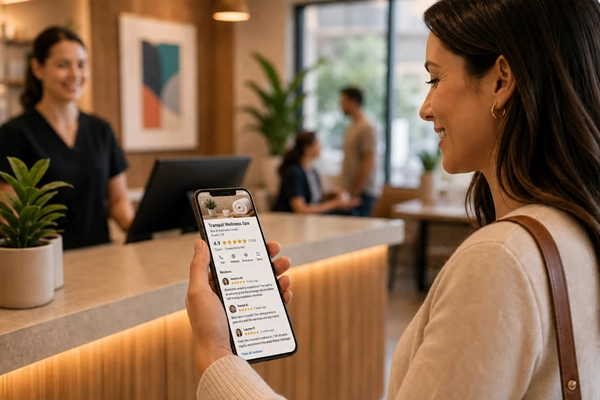
How it influences sales
Strong reputation reduces perceived risk. Customers feel that others already tested and approved the company. This shortens the path to contact and improves conversion.
Weak reputation makes customers compare more, ask for more reassurance or choose another option.
Referrals also go digital
Even when someone receives a referral, they often search before acting. If online presence confirms the recommendation, trust grows. If it contradicts it, the referral loses strength.
Digital reputation supports word of mouth.
Where Rankke.me fits in this strategy
Digital reputation is built from visible trust and private discipline. Search engines, customers and AI tools can see reviews, ratings, mentions and content, but the company also needs an internal process to understand what customers are feeling before those signals become public.
Rankke.me helps create that bridge. The platform gives customers a controlled place to share satisfaction, dissatisfaction and context. When the experience is positive, the business can invite the customer to strengthen public reputation through a Google review. When the experience is negative, the team can act privately, recover the relationship and reduce the chance that frustration becomes the first visible signal about the brand.
This is especially relevant as discovery becomes more competitive. Companies that accumulate recent reviews, consistent answers and clear customer evidence tend to look safer to people comparing options. Rankke.me turns those signals into a repeatable workflow instead of leaving reputation to chance.
The strategic point is simple: the business should not wait for the public internet to reveal what customers think. It should listen first, act quickly and then convert satisfaction into proof.
How to use the article in a conversion workflow
Reputation content should help a business owner make a simple decision: where the company is losing trust and what can be improved now. For a clinic, pizzeria, school or franchise, that means listening to customers, fixing problems and turning good experiences into reviews that help new customers choose.
The business can use the same logic internally. Every public signal should connect to an operational owner. Reviews should be answered. Compliments should become proof. Complaints should become recovery. Repeated themes should become process improvement. When this routine exists, reputation becomes a growth asset instead of a reactive task.
Rankke.me gives this routine a system: collect feedback, classify the customer experience, protect the brand when needed and turn satisfaction into stronger public evidence.
Connection with Google and AI
Reviews, mentions and consistency help search engines and AI systems understand the company. There is no guarantee of recommendation, but reliable signals increase clarity and authority.
How to improve
Monitor reviews, answer feedback, collect NPS, generate real social proof and keep channels updated. Rankke.me helps connect these routines.
How to turn this topic into a routine
For a local business, this topic is practical. A customer chooses with the information they can see: reviews, comments, photos, clear services, recent replies and the feeling that other people had a good experience. These details work together to create trust before the first contact.
The first step is to map where the company appears: Google, website, social profiles, directories, marketplaces, location pages and institutional materials. Then check whether the message is consistent everywhere. A business can deliver a strong experience and still lose trust when public information looks incomplete or contradictory.
Metrics to monitor
Track what a manager can actually use: how many new reviews arrive, what customers praise, what complaints repeat, how fast the team replies and whether more people call, book, ask for directions or place orders after seeing the business online.
These indicators show whether the business is merely visible or whether it is building enough authority to be remembered, compared and recommended.
A practical 30-day plan
In week one, review the main digital presence points. In week two, organize replies and review requests. In week three, create or improve content that explains services, differentiators and common questions. In week four, compare signals before and after: reviews, comments, searches and contacts.
Progress comes from repetition. Strong reputation is built when the company turns good experiences into public evidence that is easy to find.
Mistakes that reduce impact
The most common mistake is caring about reputation only when criticism appears. Another is publishing generic content unrelated to real customer doubts. It is also risky to ignore positive reviews, because they show which promises the company already fulfills.
Rankke.me helps connect satisfaction, reviews and reputation in a simple routine for local teams and multi-location operations.
Practical example
Think about a buyer comparing three local companies. The websites may look similar, the services may sound similar and the prices may not be visible yet. Reputation becomes the shortcut for trust. The buyer reads recent reviews, looks for signs of consistency and checks whether the company responds professionally when something goes wrong.
Rankke.me helps businesses manage this trust layer before it depends entirely on public reactions. By collecting feedback privately, the company learns where the experience is strong and where it is vulnerable. By guiding satisfied customers toward public reviews, it creates proof that future buyers can see. By routing dissatisfied customers into recovery, it reduces the chance that the first signal a buyer finds is an unresolved complaint.
In practice, reputation becomes a managed process. The company stops waiting for customers to speak only when they are extremely happy or extremely frustrated and starts building a more balanced, reliable public presence.
How to deepen the analysis before deciding
The next step is to separate visibility from trust. A company may appear in search, social media or AI-generated answers and still fail to convert if public evidence is weak. Buyers look for signs that other people had a good experience, that the company responds responsibly and that the information they find is consistent.
A practical reputation analysis looks at recent reviews, repeated comments, unanswered criticism and whether the website explains the business clearly. If one of these points is weak, the customer may hesitate even when the offer is good.
Rankke.me helps because it gives the business a controlled way to create better public evidence. The company listens first, handles risk privately and invites satisfied customers to strengthen the public reputation layer. That process makes reputation less dependent on random customer behavior and more connected to daily operations.
For growing businesses, this discipline becomes a competitive advantage. The market does not see every good experience, only the ones that become visible. Rankke.me helps more of those positive experiences become findable proof.
Frequently asked questions
Is online reputation only reviews?
No. It includes reviews, content, presence, replies and consistency.
Does reputation influence SEO?
It can support trust, conversion and local signals.
Where should I start?
Review Google, website, reviews and main channels.
Can it improve quickly?
Some fixes are fast, but strong reputation requires consistency.