Fake Google review: what to do and how to protect your reputation
Learn how to handle suspected fake reviews, respond publicly and organize evidence without escalating the situation.
Why fake reviews are sensitive
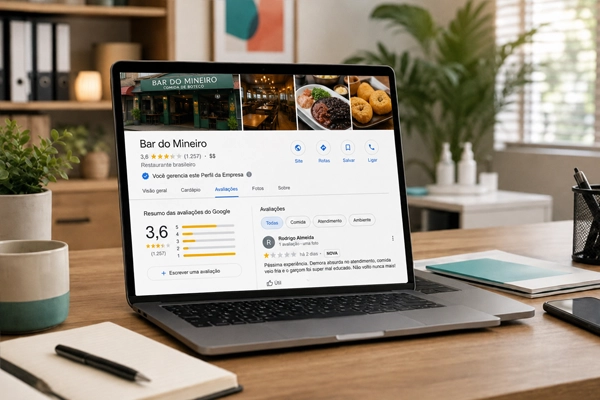
A fake Google review can feel unfair and urgent. It is public, visible and can influence new customers. Still, the business response must be calm and organized. An angry reply usually makes the problem bigger.
Verify before replying
Try to identify whether the reviewer had a real relationship with the business. Search by name, phone, email, date, unit, product or service. Talk to the team and check internal records.
This prevents two mistakes: calling a real customer fake or ignoring a legitimate problem.
Respond publicly with care
If you cannot identify the customer, answer professionally.
We could not locate a service record with the information available in this profile. We would like to understand what happened and ask you to contact our official channel so we can review the case.
The response does not accuse. It shows future customers that the company is present and willing to investigate.
Where Rankke.me fits in this strategy
A direct Google review link is useful, but sending it to every customer is not always the safest strategy. The link removes friction, but it also removes context. If an unhappy customer receives that link before the company understands the problem, the business may be guiding dissatisfaction straight into a public channel.
Rankke.me works one step before the Google review. The customer first enters a controlled reputation flow, answers a satisfaction question and reveals whether the experience was positive, neutral or negative. When the answer indicates satisfaction, the platform can guide that customer to Google with a clearer and more relevant request. When the answer indicates risk, the company can open a private recovery path instead of encouraging a public complaint.
This does not replace the Google Business Profile. It protects it. Google remains the visible trust point, while Rankke.me helps decide when and how to invite customers to contribute there. The result is a more consistent flow of positive reviews and less chance of turning unresolved frustration into visible damage.
For local businesses, this distinction is important. Reputation growth is not only asking more often. It is asking the right people, at the right moment, after listening first.
How to use the article in a conversion workflow
The practical conversion opportunity is to stop treating review requests as isolated messages. A business should know who receives the request, which experience triggered it, which channel delivered it and what happened afterward. Without this structure, the team may celebrate a few new reviews while missing unhappy customers who needed attention.
A safer workflow has three stages. First, listen privately with a satisfaction question. Second, separate customers by risk and enthusiasm. Third, guide satisfied customers to the public review page while routing dissatisfied customers to recovery. This protects the brand and creates a healthier review profile over time.
The result is more than a better rating. The company creates a visible proof system that supports sales, local search, paid media, referrals and the trust needed for a new customer to choose the business.
Document evidence
Keep the review link, profile name, date, screenshot, internal checks and response status. Reputation management is also documentation.
Reduce the impact with real reviews
A suspicious review has more weight when the profile has few comments. A steady flow of authentic reviews reduces the proportional impact of isolated cases.
Warning signs to investigate
Some signs deserve attention: generic accusations, personal attacks, profiles with no visible history, several similar reviews in a short time, references to services the company does not offer or mentions of dates when the business was closed.
None of these signs proves the review is fake by itself. Customers can use nicknames or vague descriptions. That is why internal verification should come before accusation.
Build a simple evidence file
Keep the review URL, profile name, publication date, screenshot, internal search notes, public response and escalation status. If there are repeated suspicious reviews, document the pattern.
This record helps if the issue needs platform support, legal review or internal reporting. Reputation work becomes easier when evidence is organized.
Defensive and active reputation
Handling fake reviews is defensive reputation management. Active reputation is the ongoing work of generating authentic reviews, answering comments, monitoring satisfaction and fixing recurring issues.
Removing one review may help. Building a stronger review profile helps every day.
Internal workflow for suspicious reviews
Create a simple workflow so the team does not improvise. First, capture the review and assign an owner. Second, check internal records. Third, decide whether the comment is likely a real customer issue, a policy violation or an unknown case. Fourth, publish a calm response. Fifth, escalate only when there is a clear reason.
This workflow reduces emotional reactions. It also helps leadership see whether suspicious reviews are isolated or part of a pattern.
When a negative review is real
Sometimes the review is not fake. It is uncomfortable, incomplete or exaggerated, but it comes from a real customer experience. In that case, the company should treat it as feedback. A professional response and a real recovery attempt can protect trust.
The goal is not to prove the customer wrong in public. The goal is to show future customers that the business listens and acts responsibly.
Prevention through monitoring
Fast monitoring reduces damage. The sooner the business sees a suspicious or negative review, the sooner it can verify, respond and decide next steps. Waiting weeks to answer makes the profile look abandoned and gives the comment more time to influence buyers without context.
Set a routine for review checks and alerts. Reputation protection is much easier when the team sees issues early.
How to turn this topic into a routine
To apply Fake Google review: what to do and how to protect your reputation without improvisation, define the moments when customers are most likely to be satisfied. This may happen after a completed delivery, a well-rated appointment, a resolved support case, a repeat purchase or a positive answer in a satisfaction survey.
From there, the review request should be simple, direct and contextual. The customer needs to understand why their opinion matters, receive an easy link and never feel pressured. The less friction there is, the easier it becomes to turn real satisfaction into a public review.
Metrics to monitor
Track new reviews per week, average rating, rating distribution, response speed and recurring themes. Also check whether recent reviews reflect the company's current experience. A profile with many old reviews may look strong, but an active profile creates stronger confidence.
Another important metric is invitation coverage. If many satisfied customers never receive a request, the business loses social proof every day.
A practical 30-day plan
In week one, review the Google review link and sending channels. In week two, choose the best request moments and write messages for each context. In week three, organize replies for praise and criticism. In week four, analyze received comments and turn patterns into internal actions.
This process creates a light routine: ask at the right moment, reply carefully and learn from what appears publicly.
Mistakes that reduce impact
Avoid buying reviews, offering rewards, asking only friends or telling customers which score to give. Besides damaging trust, these practices can create risk for the company profile.
Rankke.me helps prioritize satisfied customers, reduce request friction and keep reputation management ethical and measurable.
Frequently asked questions
Does Google remove fake reviews?
It may remove reviews that violate policy, but each case is reviewed individually.
Should I reply to a fake review?
In most cases, yes. A professional response protects perception.
Can I prevent fake reviews?
Not completely, but monitoring, fast replies and real review volume reduce impact.